




Having Problems with Your
Dental Implants?
Loose, painful, or failing implants can often be fixed. If your implants aren’t working the way they should — or another provider couldn’t help — our board-certified oral surgeon specializes in diagnosing and repairing complex implant cases.
Home / Implant Problems & Repair
Why Do Dental Implants Fail?
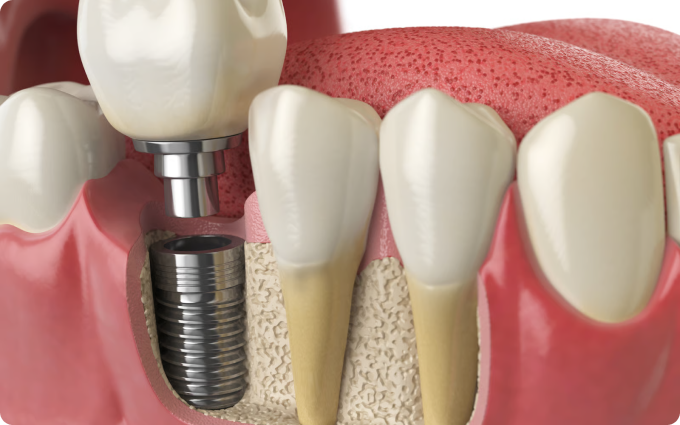
An implant can run into trouble for several reasons — and pinpointing the real cause is the first step to fixing it. Common causes include:
- Improper placement or angulation
- Bone loss around the implant
- Infection (peri-implantitis)
- Too few implants to support the prosthesis
- Health or healing factors that affected integration
Sometimes it’s a single issue; often it’s a combination. Our evaluation uses 3D imaging to identify exactly what went wrong so your repair is built on an accurate diagnosis — not guesswork.
Don’t Wait to Address a Failing Implant
A struggling implant rarely improves on its own. Acting early usually means a simpler, more predictable repair:
A failing implant can accelerate bone loss, making future treatment more complex.
Peri-implantitis can worsen and affect neighboring teeth and implants.
In full-arch cases, one failing implant can put the entire restoration at risk.
Discomfort and an unstable bite affect daily life and nutrition.
The longer you wait, the more likely you’ll need bone grafting and a larger revision.
Complex Implant Cases Are Our Specialty
Repairing failed implants takes more than routine training. Dr. Peter Krakowiak is a board-certified oral surgeon recognized among the World’s Top 100 Doctors (Class of 2023, GSI), with advanced expertise in the kind of complications many providers aren’t equipped to treat. If you’ve been told your case is “too difficult,” it may be exactly the type of case we resolve.
Signs Something May Be Wrong
If you’re experiencing any of the following, it’s worth having your implants evaluated. Most of these problems can be corrected:
An implant or restoration that moves, clicks, or feels unstable.
Discomfort or gums pulling back around the implant.
A full-mouth restoration that isn’t fitting, functioning, or surviving as it should.
Deteriorating bone support threatening implant stability.
A lost, fractured, or failed implant that needs to be removed and replaced.
How We Fix Failing Implants
Diagnostic Consultation
We review your history, examine the implants, and use 3D imaging to identify exactly what’s going wrong.
Remove What’s Failing
When an implant can’t be saved, we carefully remove it while protecting the surrounding bone and tissue.
Rebuild the Foundation
If bone has been lost, we rebuild it with grafting so future implants have solid support.
Replace or Revise
We place new implants or redesign the treatment plan — including full-arch cases that were done incorrectly elsewhere.
Restore Your Smile
We complete your final, stable restoration and set you up with a clear plan to keep it healthy.
Can It Be Fixed?
In many cases, yes. Not every troubled implant has to be removed — some problems are caught early enough to save the implant with targeted treatment. When an implant truly can’t be salvaged, replacing it correctly is usually straightforward once the underlying cause is addressed. The key difference is experience: complex and failed cases require a surgeon who can plan the full picture, rebuild bone when needed, and redesign full-arch restorations. A second-opinion consultation is the best way to find out what’s realistically possible for your situation.
Recovery and Long-Term Care
Recovery depends on the repair, and we’ll give you clear, simple instructions for your specific case. Many patients are comfortable within a day or two, while cases involving bone grafting or multiple implants heal in stages. Once your repaired implants are settled, keeping them healthy is simple: brush and floss as directed, and stay consistent with follow-up visits so we can catch any concern early.
Frequently Asked Questions
My implant feels loose. Is that an emergency?
Can a failed implant really be replaced?
My full-arch (All-on-4) restoration isn't working. Can you fix it?
Do I need to go back to the dentist who placed my implants?
Will I need bone grafting?
Why Patients Trust Us with Complex Cases
Repairing a failed implant is very different from placing a new one. It takes a surgeon who can diagnose the true cause, rebuild what’s been lost, and redesign a plan that finally works. That’s the standard of care Dr. Krakowiak brings to every revision case.
- Board-certified oral surgeon
- Recognized among the World’s Top 100 Doctors (Class of 2023, GSI)
- Focused expertise in failed and complex implant cases
- Full-arch (All-on-4 / All-on-X) revision experience
- Bone grafting and reconstruction under one roof
- Advanced 3D imaging and surgical planning
- Sedation options for a comfortable experience
- Honest second opinions — no pressure

A Surgical Team You Can Trust
Complex repairs demand a skilled, coordinated team. Our surgical staff is highly trained and credentialed, and every case follows strict safety and sterilization protocols — from detailed diagnostic planning through attentive follow-up. You’ll be cared for by people who take your situation seriously and explain every step along the way.
What Our Patients Say


Request a Second Opinion
Tell us what’s happening with your implants and our team will reach out to schedule your evaluation.